Just about everyone feels pain from time to time. When we feel pain, sensory receptors in our skin send a signal via nerve fibres to the spinal cord and brainstem and then onto the brain where the sensation of pain is registered, the information is processed and the pain is perceived. Usually the signal stops when the cause of the pain is resolved i.e. your body repairs the wound on your finger or your torn muscle. But with chronic pain, the nerve signals keep firing even after you’ve healed. It can interfere with your daily life, keeping you from doing things you want and need to do. But a technique called neuromodulation gives you the independence to control when and where you need pain control.
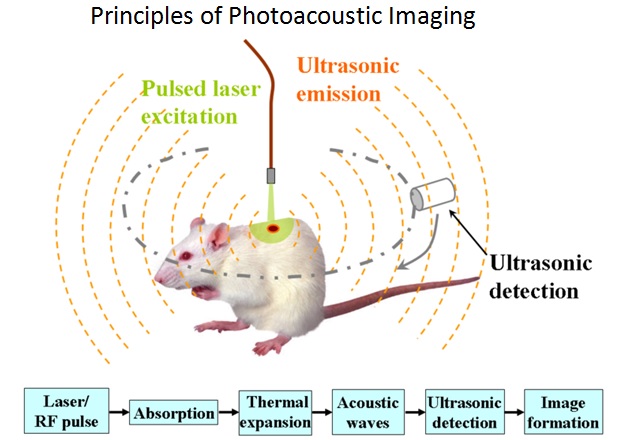
PhotoAcoustic imaging is an imaging modality that uses laser light and ultrasound detectors to image tissues. Photo = Light. Acoustic = Sound. The imaging uses the photoacoustic effect principle. The photoacoustic effect is not new in terms of discovery as it was reported by none other than Alexander Graham Bell (yes! Rings a bell doesn’t it?) as early as 1880. But, the unavailability of proper detectors and instruments at his time was an obstacle to expanding research in this field.
Diabetes prevalence is rapidly increasing in the world. The number of people with diabetes has risen from 108 million in 1980 to 422 million in 2014. Considering the size of the problem, you must all have seen or maybe used a glucose monitor. So, how does it work?
Blood glucose level is kept in check in the body by a hormone called insulin, produced by the pancreas. Unstable insulin levels in blood may cause excess glucose to be converted to fat and be deposited on your blood vessels as plaque. This may cause various complications such as cardio-vascular disease, nerve damage, kidney damage, eye damage among a lot of other complications.
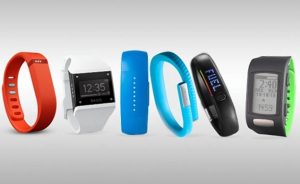
Most often, people use Fitness trackers for keeping track of their fitness activity, set achievable goals and to motivate themselves. Fitness trackers are mostly wearable electronics that measure/track your activity such as steps taken, distance walked, calorie consumption and even heart rate in some cases. Most fitness trackers have an accelerometer that helps in tracking our activity. Some fitness trackers may also have altimeter, music player and many other features. So, how does the fitness tracker do it?
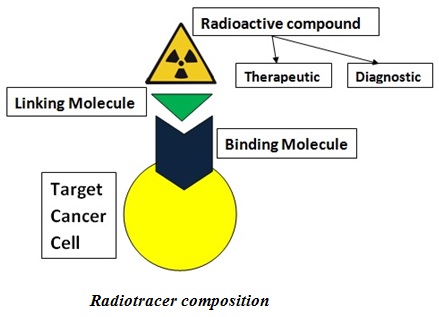
Radiotracers are chemical compounds that are used to diagnose or deliver therapy to specific organs and tissues. The radiotracer consists of a linking molecule, a binding molecule and a radioactive compound. Radiotracer is injected into the body and it binds to specific target cells in the body. The linking molecule binds the radioactive compound to the binding molecule, which then binds to specific cells in body.
The radiotracer decays by emitting ionizing radiation that damages nuclear DNA, thereby stopping division of cells (cancer as well as normal cells). Radiotracers are not something new. In fact, they have been around for 100 years !!
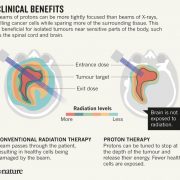
Conventional Radiation therapy techniques use X-rays (‘photons’) to treat cancer by focussing X-rays on cancer regions. Proton therapy is a technique to treat cancer by the use of ‘protons’. The usage of protons to treat cancer may be advantages in various ways.
Radiation therapy for cancer treatment causes unnecessary exposure to healthy cells also, posing health risks on the patient. We can use Proton therapy for the following reasons.
We may want to expose children and pregnant women to lower amount of radiation.

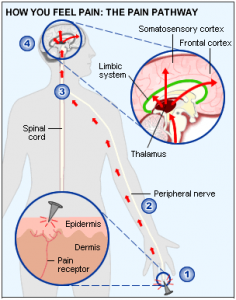 Just about everyone feels pain from time to time. When we feel pain, sensory receptors in our skin send a signal via nerve fibres to the spinal cord and brainstem and then onto the brain where the sensation of pain is registered, the information is processed and the pain is perceived. Usually the signal stops when the cause of the pain is resolved i.e. your body repairs the wound on your finger or your torn muscle. But with chronic pain, the nerve signals keep firing even after you’ve healed. It can interfere with your daily life, keeping you from doing things you want and need to do. But a technique called neuromodulation gives you the independence to control when and where you need pain control.